


DBrandon Hansen@brandonsannulus· 8hSince I teach astronomy, many astrologers are confused when I tell them I use Whole Sign Houses exclusively in my practice. There seems to be collective (mis)understandings that as a system, Whole trades mathematical accuracy for rounded efficiency. However, I'd like to make the case that Whole is, in fact, astronomically accurate.
Part I. The Nonagesimal M
Ask an astrologer to define the M, and they'll describe it as something like the "highest point of the ecliptic above you,” and explain how its themes of legacy, along with those of the 10th house, career, public view, government, are derived from this astronomical feature of the M, being above everything else.
By default, nearly every chart-generating software (including most Whole calculators!) defines the M as the point where the Ecliptic is intersected by the Meridian, the line formed by tracing exactly North to South through the local Zenith. We’ll call this the “Meridian M”. However, for 99% of each day, this is *not* the highest section of the Ecliptic.
That honor goes instead to the point exactly 90° square to the horizon, the “Nonagesimal M”. This is geometrically simple; on a semi-circle, the furthest point of the curve from the bisecting line is perpendicular to that line. A planet 90° above the horizon is higher above you than one at the Meridian. So, calculating the M here is astronomically valid, and represents the 10th cusp in Whole, Equal, and Vehlow House systems, where it is perpetually in the 10th.
(The Meridian M communicates something different: the Meridian is where any particular degree culminates. But while that degree is experiencing its own highest point above the horizon, this does not conclusively define it as a house-cusp. I would argue that the Meridian M is more like the Vertex, which is a worthwhile point derived from Great Circles, but not a marker of a house.)
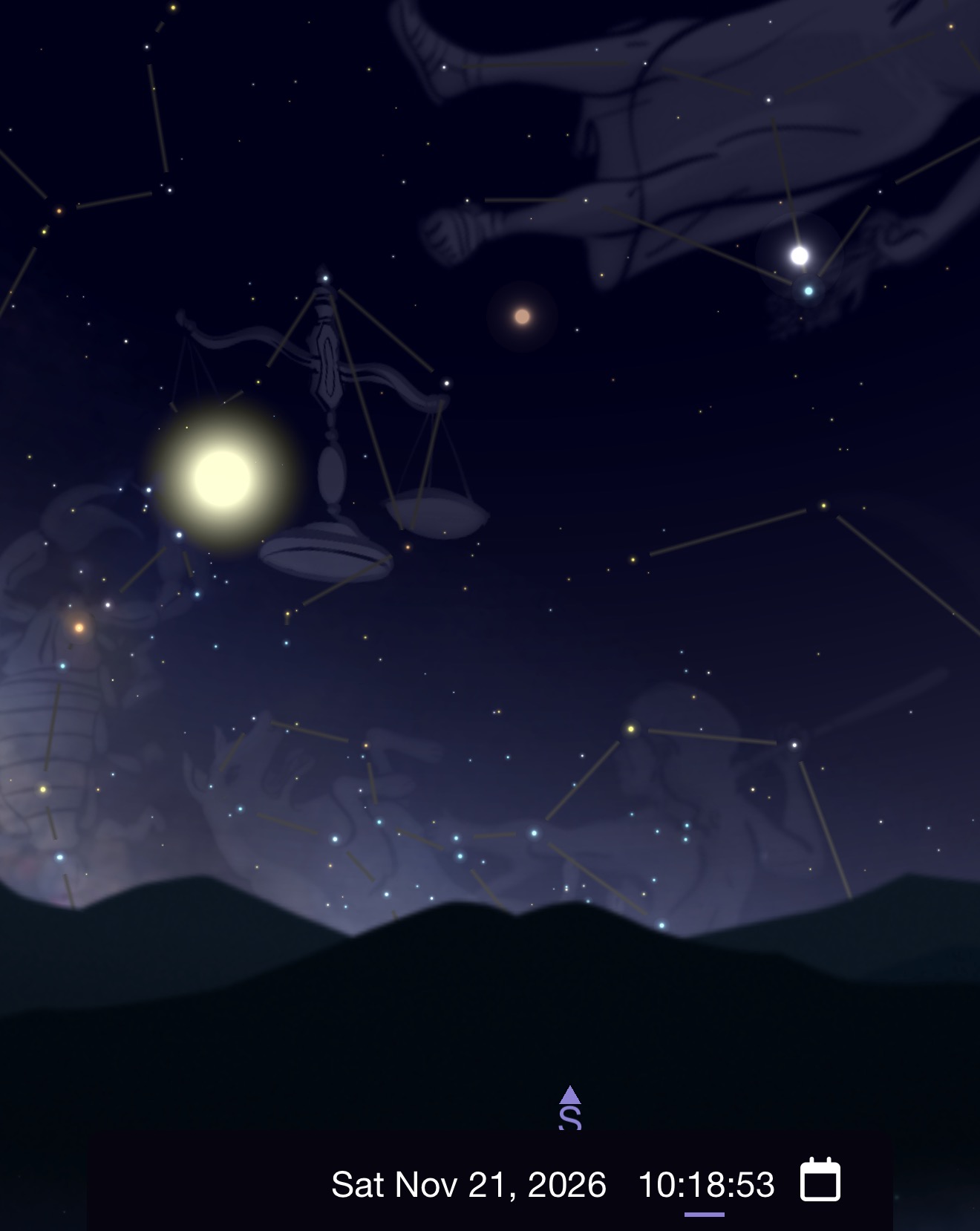
Peep the difference between Venus & Mercury in today's example chart.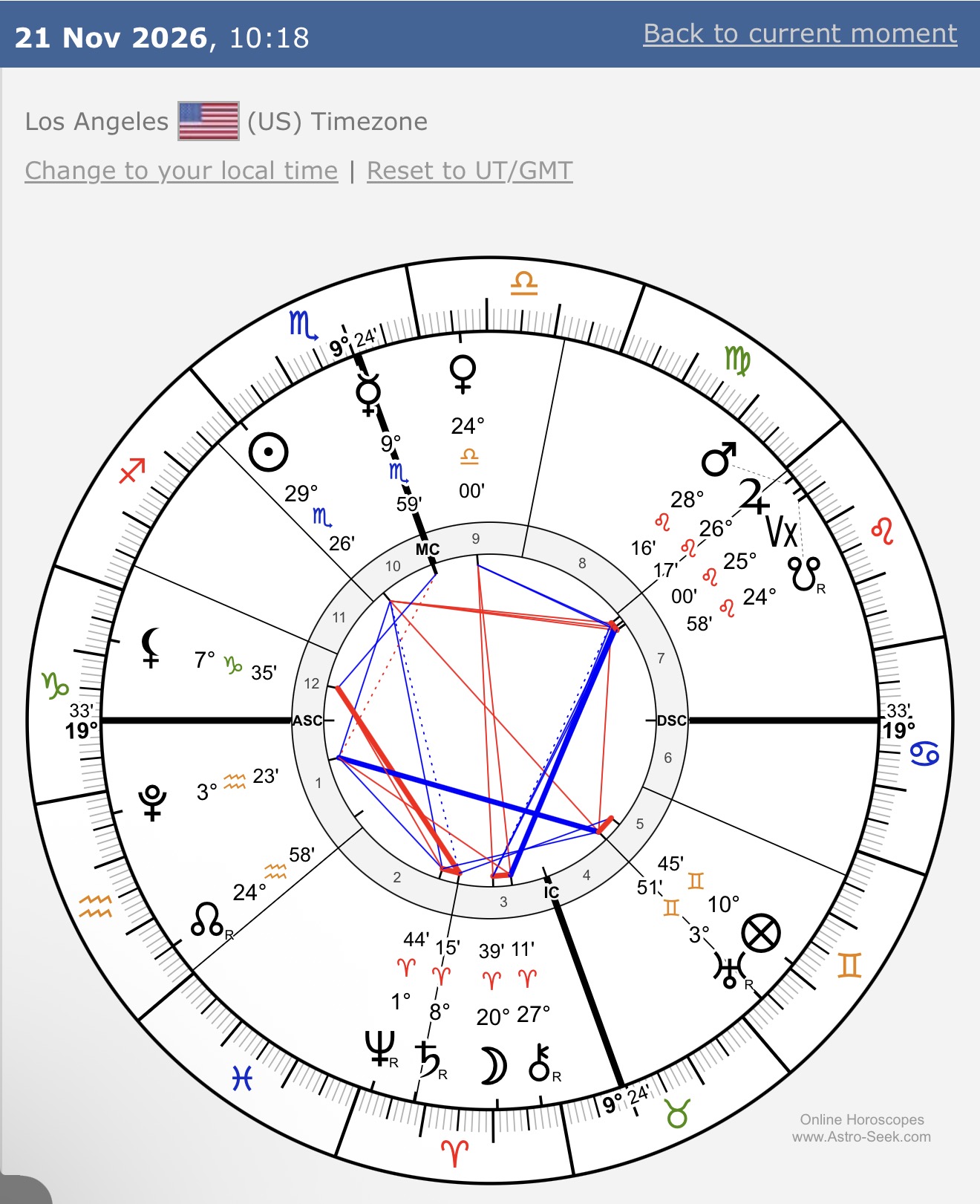
Ba360 Views